THE HIISI PLATFORM

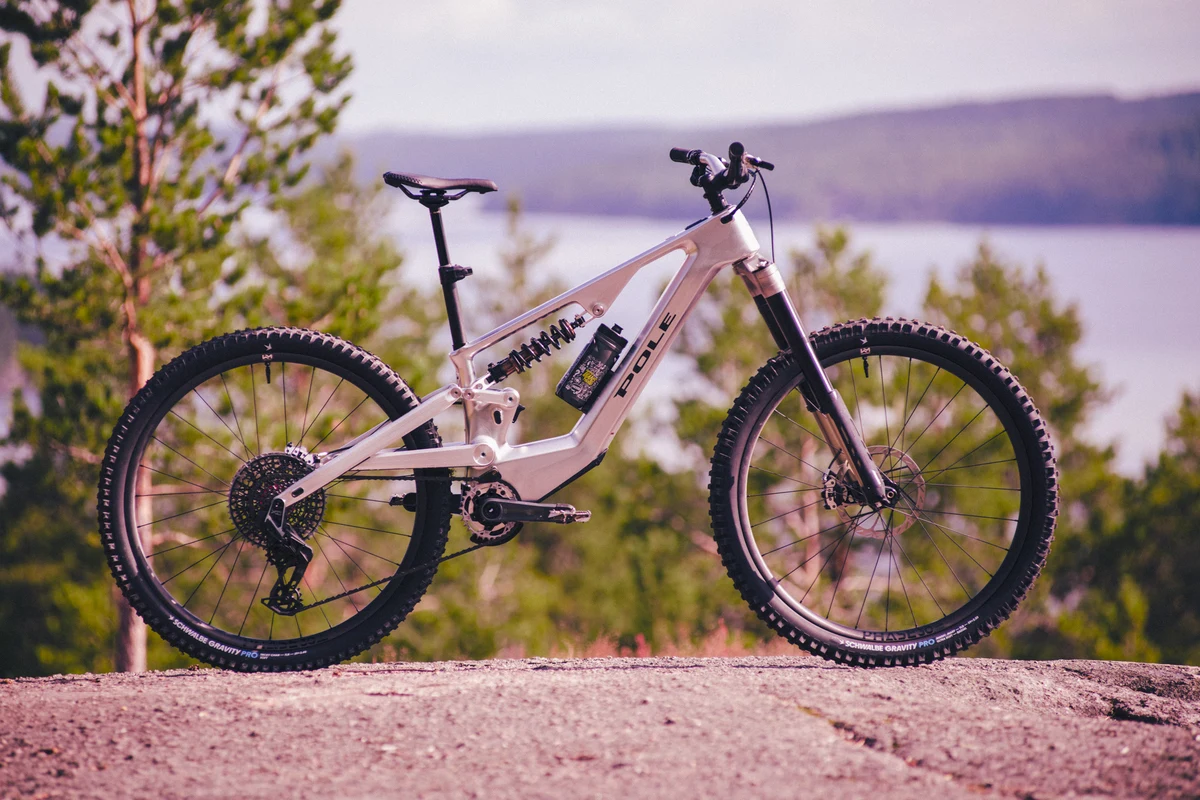
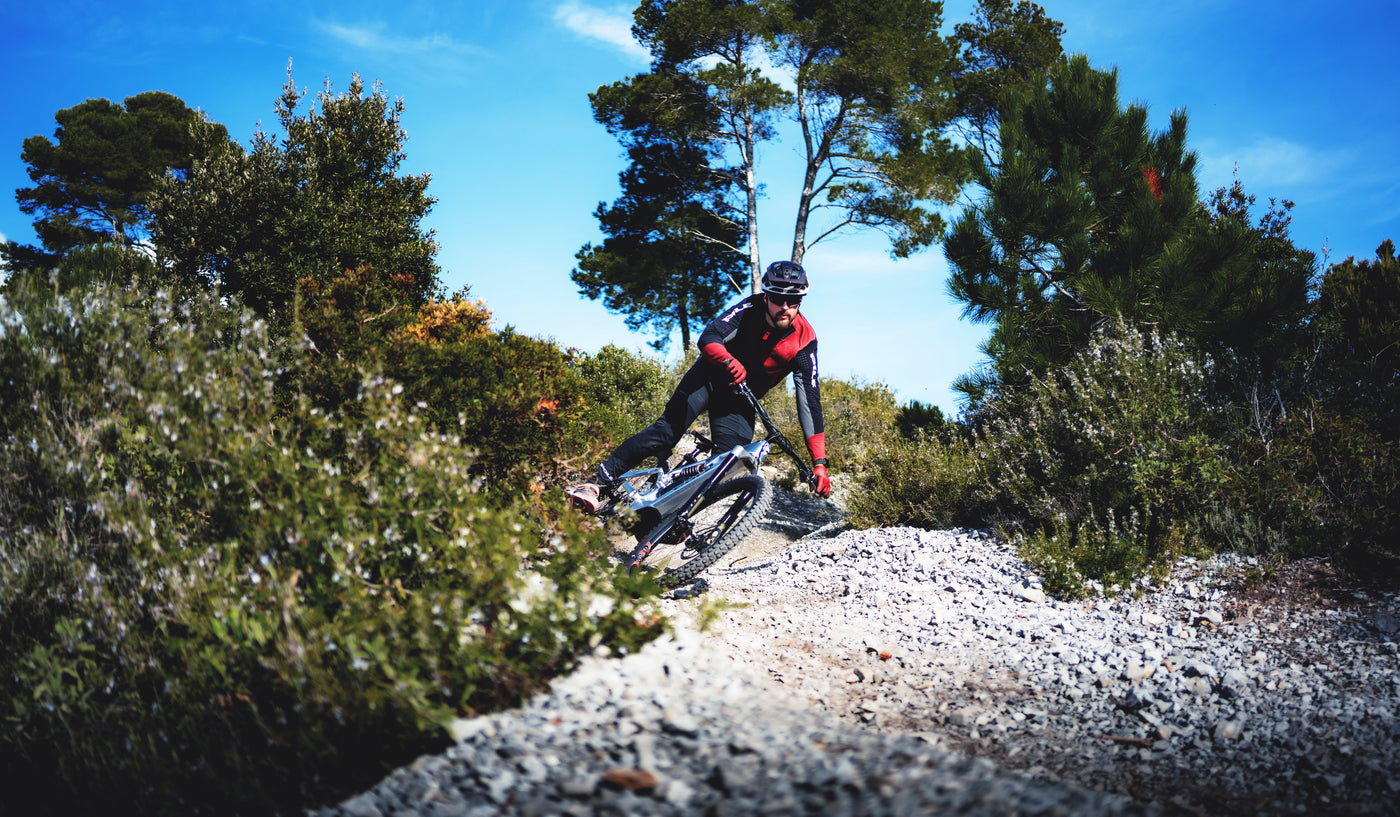
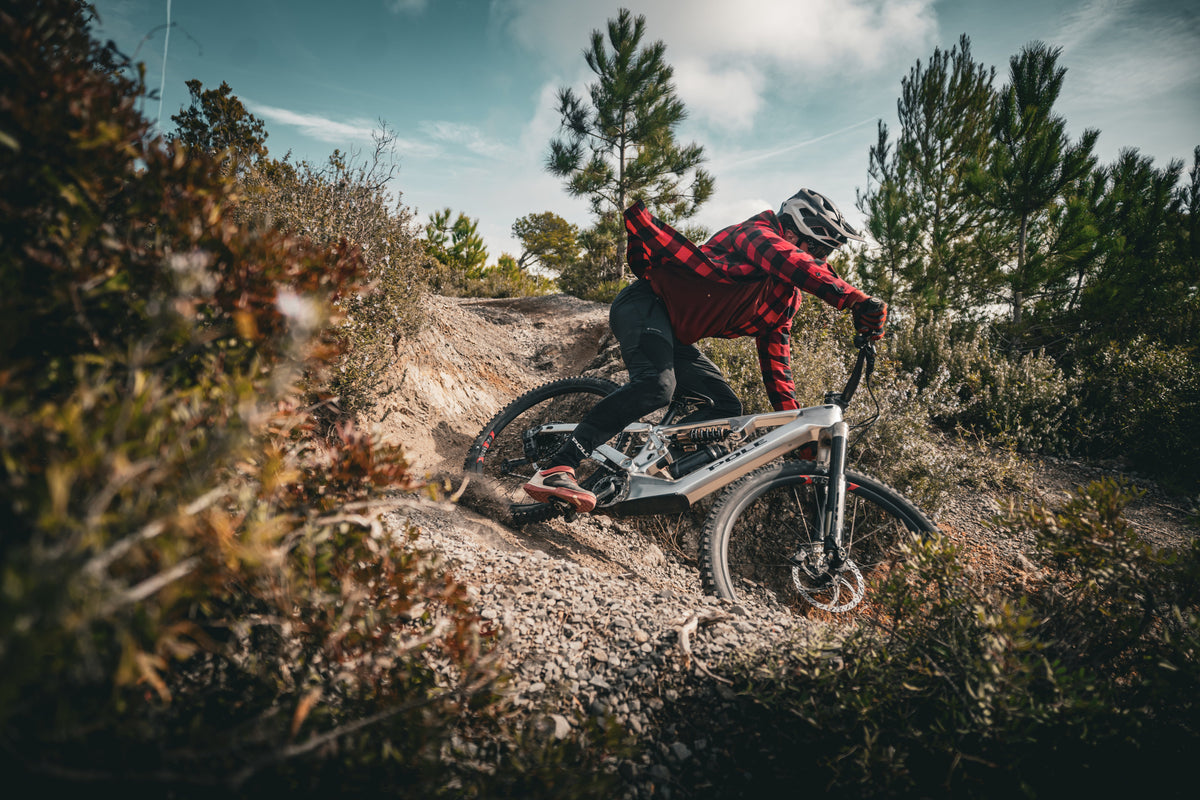
One frame. 152 to 200 mm. Your terrain.

A range that would require four separate bikes from any other manufacturer. We do it with one frame.

DESIGN PHILOSOPHY

The industry sells categories. We engineered a platform.

Pole defined the modern long-travel geometry with Evolink — before the industry followed. Machine, Stamina, and Onni proved the direction for long-travel enduro at the highest level. Onni introduced the world’s first modular frame architecture for mountain bikes.

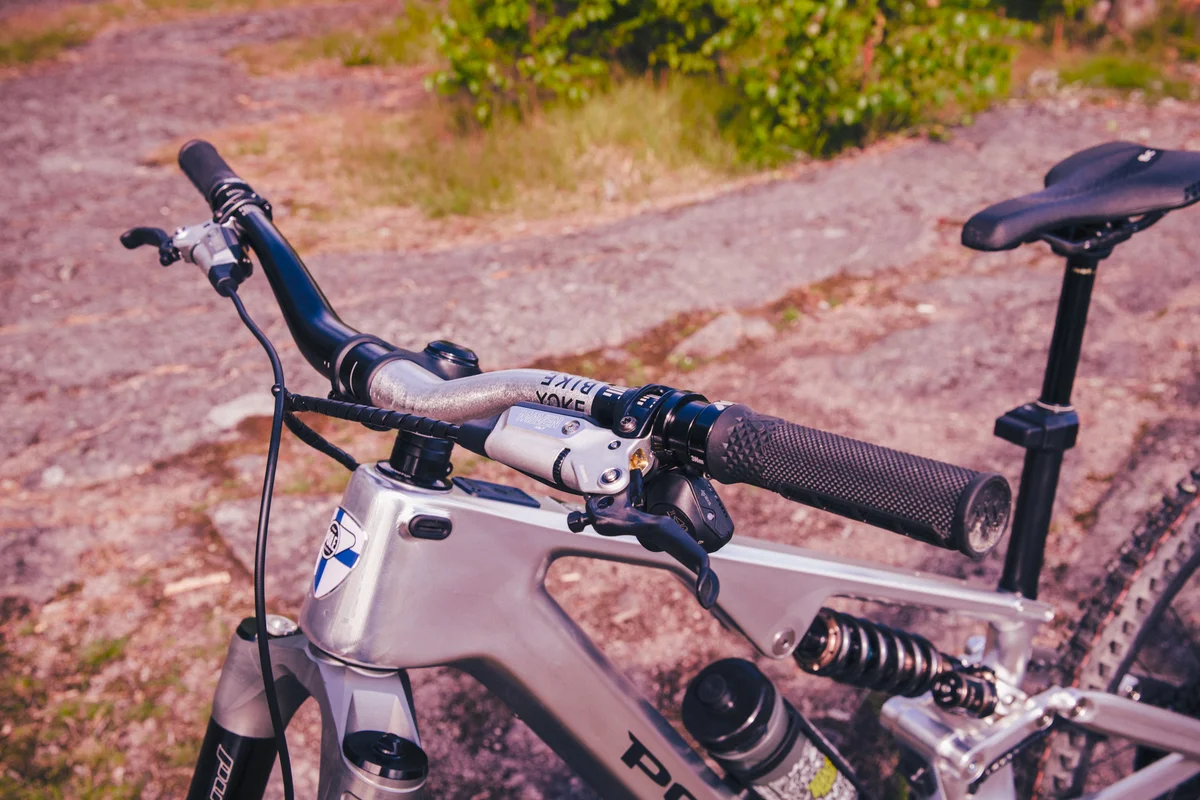
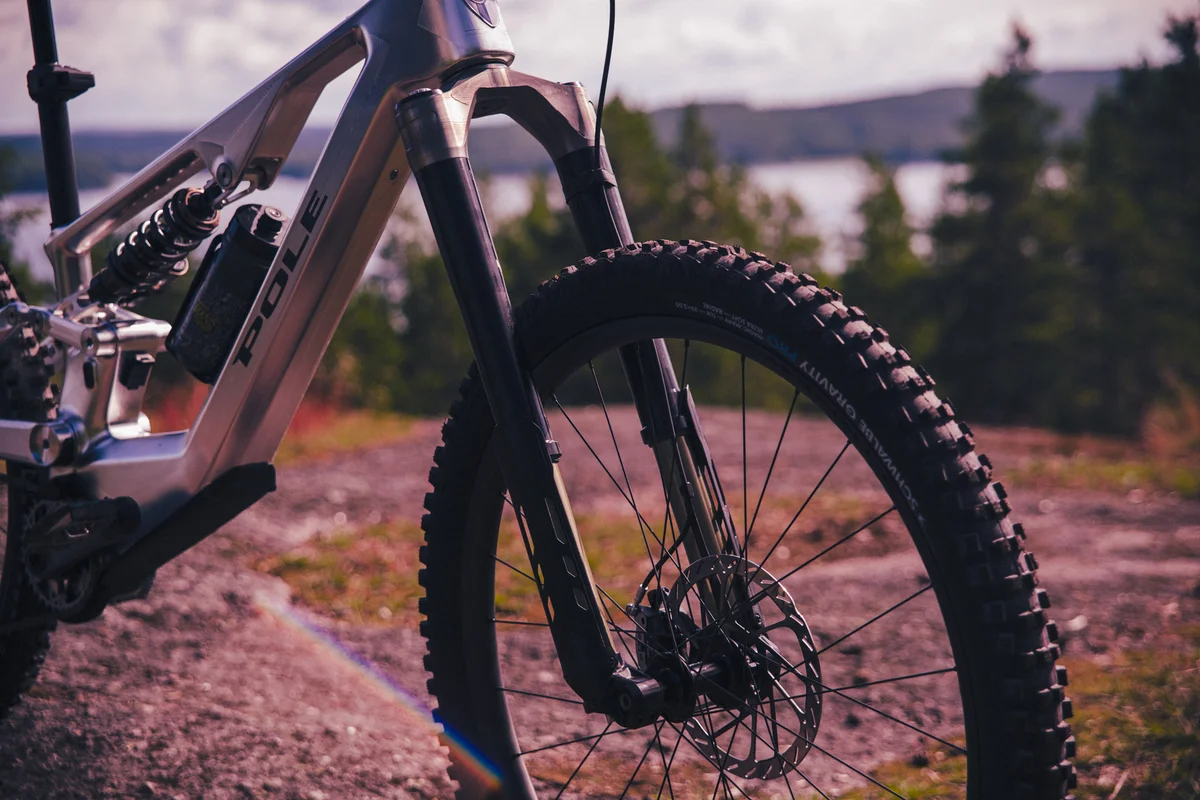
The Hiisi takes modularity further. Every dimension, every curve, every wall thickness designed from first principles and machined to ±0.05mm. A frame that adapts to its rider — not the other way around.

This is not iteration. It’s a new starting point. Designed by Leo Kokkonen — one engineer, one vision.

THE PLATFORM, LIVE

See it change.

Pick travel, wheels, size and finish. Watch the bike shift.

Hiisi Bespoke 173mm K2
Live Geometry · K2
THE RANGE
152
 
Trail
173
 
All-mountain
180
 
Enduro
200
 
Gravity
EfficiencyCapability

Four suspension configurations from one frame. The Hiisi platform covers 152 mm to 200 mm of rear travel — a range that would require four separate bikes from any other manufacturer.

Changing configuration doesn't mean bolting on longer parts and hoping the geometry works. Every travel setting has been engineered with its own kinematics, head angle, and bottom bracket height. The frame doesn't adapt by accident. It adapts by design.

12 CONFIGURATIONS

One frame. Twelve characters.

Every configuration has its own geometry, kinematics, and personality. The wheel setup shifts the balance. Pick the combination that matches how you ride.

29" Mullet 27.5"
Trail
152 mm
Light, efficient, built to climb and flow. Lightest setup. Quick, nimble, more playful.
All-mountain
173 mm
The allrounder. Goes anywhere, asks nothing. Playful when you want it, planted when you need it. Lighter, lower, throws into corners on command.
Enduro
180 mm
All-mountain with more room underneath. Rough and fast. The same confidence, more clearance when it counts. Nimble and forgiving over rocks you'd rather not see.
Gravity
200 mm
Bike park velocity. Flat out, full confidence. Throws shapes between the tape. DH with swagger. Lightest gravity build. Pure commitment.
CONFIGURATIONS
152
mm rear travel
Trail
Light, efficient, precise. Maximum pedal performance with serious descending capability.
Shock: 55×210
173
mm rear travel
All-mountain
The balanced point. Climbs with purpose, descends with authority.
Shock: 65×230
180
mm rear travel
Enduro
Race-ready suspension. Built for timed stages and long days in technical terrain.
Shock: 67.5×250
200
mm rear travel
Gravity
Maximum travel, maximum control. When the only direction that matters is down.
Shock: 75×250
WHEEL CONFIGURATIONS
Most popular

Full 29"

Maximum rollover and stability. Higher bottom bracket, slacker geometry. The default choice for most configurations and rider heights.
Gravity setup

Mullet

29" front, 27.5" rear. Lower center of gravity, quicker rear wheel response, more aggressive geometry. Primarily designed for the 200mm gravity configuration.
FULL GEOMETRY
Configuration
Wheels
  K1 K2 K3
All measurements at sag (35% of total travel). Fork offset range depends on manufacturer. Geometry varies slightly with component choices.
SUSPENSION ARCHITECTURE

The rear axle stays where you designed it.

The Hiisi uses a low-pivot suspension layout. The reason is simple: geometry should be consistent throughout the travel.

Consistent cornering geometry

The rear axle follows a path that preserves geometry throughout the travel. Wheelbase, weight distribution, and steering characteristics remain consistent from sag to full compression.

The bike corners the same at full compression as it does at sag. Predictable handling in every scenario.

Unrestricted rear travel

When the axle path preserves geometry, rear travel becomes a tuning variable rather than a constraint. The 200mm configuration delivers more rear travel than the front fork.

The geometry preserves itself. Rear travel serves the rider, not the layout.

Direct drivetrain path

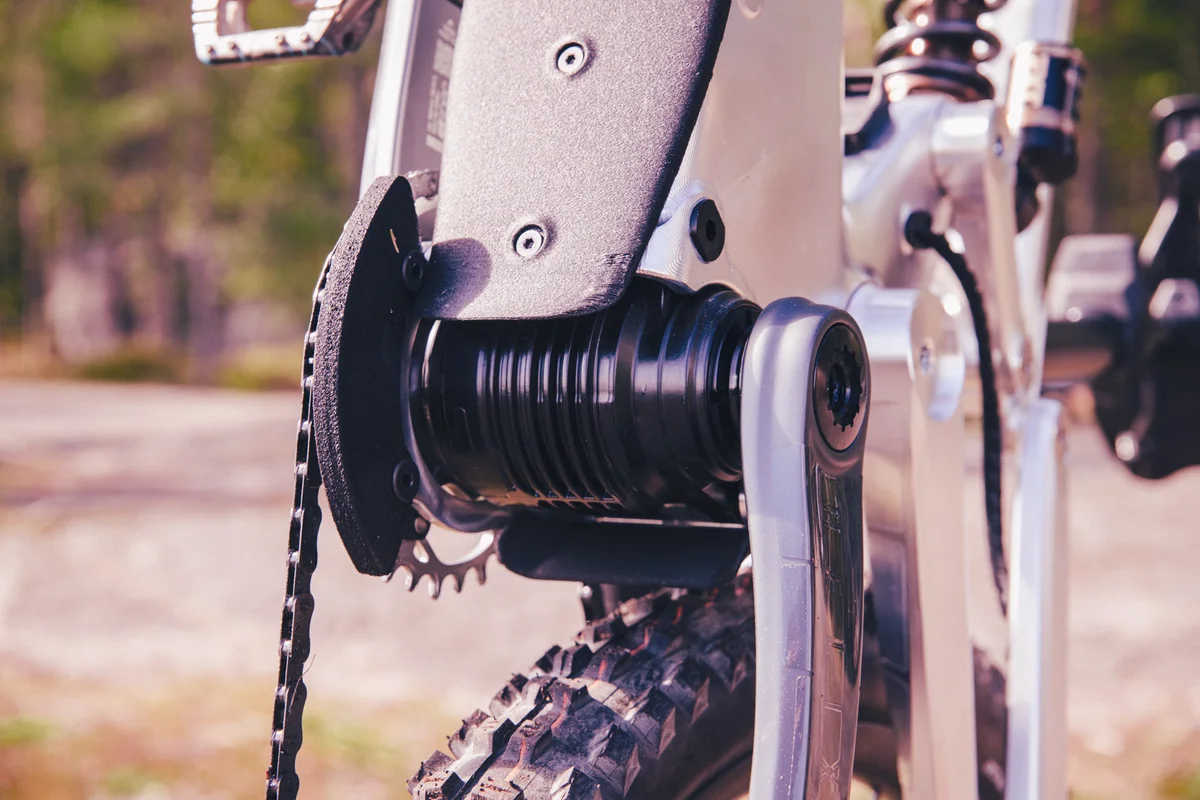
Chain runs directly from motor to cassette. Every watt reaches the rear wheel without detours. Efficiency scales with power output.

Maximum efficiency at maximum output.
SUSPENSION KINEMATICS

Four configurations. Individually engineered kinematics. Changing travel on the Hiisi doesn't just add millimeters — each configuration has its own leverage curve, tuned for its intended use. The data below is from our simulation models, validated on the trail.

A full-suspension mountain bike is fundamentally different from a rigid vehicle. The rider is the dominant mass — and that mass is dynamic. Geometry and kinematics must work together because the dynamic riding position is what matters most. We've optimized every kinematic parameter to complement the geometry, based on years of development and a clear design philosophy.

Leverage Ratio vs. Wheel Travel
Higher ratio = more leverage = softer feel. Progressive decrease provides small-bump sensitivity at the top with bottom-out resistance at the end.
Hiisi 152 Hiisi 173 Hiisi 180 Hiisi 200
3.3 3.1 2.9 2.7 2.5 2.3 2.1 0 50 100 150 200 Wheel travel (mm)

Progressive leverage is deliberate. High initial ratio means sensitive small-bump response. The progressive drop through mid-stroke provides support for pedaling and cornering. At full travel, the falling ratio resists bottom-out without harsh end-stroke. Click each configuration above to see how the curve adapts to its intended use.

27.3%
Progression 173
28.8%
Progression 180
30.7%
Progression 200
SUSPENSION DESIGN

The kinematics are on the Platform page. Here’s why they are what they are.

Progressive leverage

Progressive leverage ratio delivers sensitive initial travel, natural mid-stroke support, and smooth bottom-out resistance.

27–31% Progression range
3.176–3.25 Starting ratio
2.25–2.40 Ending ratio

Anti-squat: effective, not excessive

Starts around 107% at sag — enough to resist pedal bob without locking out suspension response. Drops steadily through the travel for consistent traction under power.

~107% At sag
101% At 100mm
82% At full travel

Low anti-rise

Low and consistent anti-rise keeps the rear wheel active under braking. On steep descents, this prevents the head angle from steepening excessively.

47–49% Range
7.8% Total variation

Dynamic geometry

Static geometry is a starting point. The real optimization happens in the turn, on the descent, with the rider’s weight distribution. Video consultation and personal tuning are part of the ownership experience.

A geometry chart is a starting point. The ride is dynamic. We design for the ride.
MATERIAL

Why 7075-T6 aluminum.

7075 was developed in 1943 for aircraft structural applications. It remains the highest-strength aluminum alloy in wide commercial use — the standard material for aerospace load-bearing components, military hardware, and precision tooling where fatigue life and strength-to-weight are non-negotiable.

It’s also one of the most difficult aluminum alloys to work with. It cannot be welded without destroying its temper. It requires precision machining and controlled joining methods. This is exactly why we chose it — our manufacturing process was designed for materials that reward precision.

7075-T6

Aerospace aluminum

Strongest commercial aluminum alloy. Aerospace, military, precision tooling. Cannot be welded without destroying temper — requires precision machining and controlled joining.

Yield strength 503 MPa
Fatigue strength 159 MPa
Density 2.81 g/cm³
Recyclability 100 %
Our choice

6061-T6

Standard bike aluminum

Industry standard. Easier to weld, cheaper to produce. Lower strength and fatigue resistance.

Yield strength 276 MPa
Fatigue strength 97 MPa
Density 2.70 g/cm³
Recyclability 100 %

Carbon fiber

Epoxy composite

Not one material — every layup is different. MTB frames reinforced for impact resistance, rarely light in practice. Epoxy is brittle, molecular structure degrades under cyclic loading, damage is invisible.

Yield strength Varies
Fatigue strength Degrades*
Density 1.55 g/cm³
Recyclability Near zero

MODULAR BY DESIGN

Every linkage part is a separate, replaceable component. No pressed-in assemblies. No proprietary tools. The Hiisi is designed to be serviced, modified, and upgraded — not replaced.

PATENTED

Patented axle system

Dual bearings controlled by precision axle tolerances. Press-fit retention that won't loosen. Shouldered stops that prevent over-tightening. No shims. No spacers to lose during service.

Integrated extractors

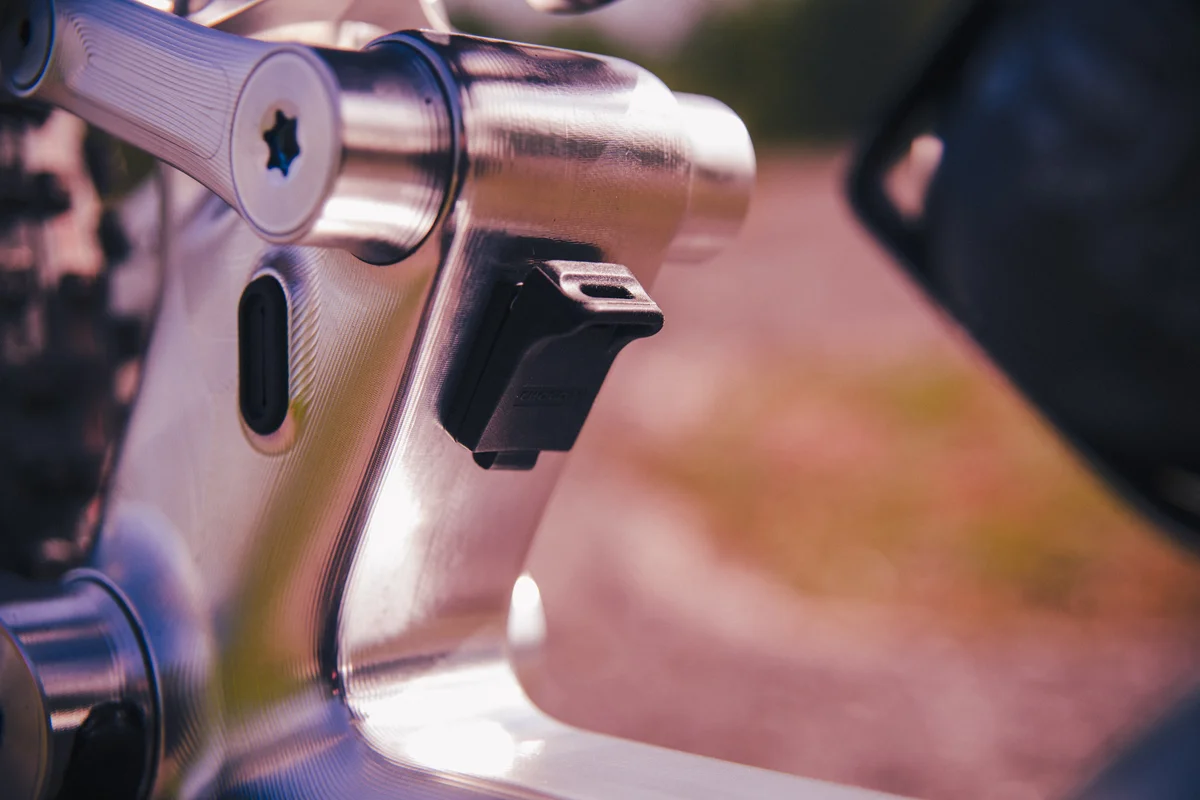
Every linkage mount has built-in extractors — like quality cranks. No blind bearings, no impact tools. Disassembly is as precise as assembly.

Controlled rear stiffness

Rear triangle stiffness is governed by a precision axle in the front triangle. Round geometry enables exact FEA simulation — stiffness is calculated, not guessed.

Internal capacity

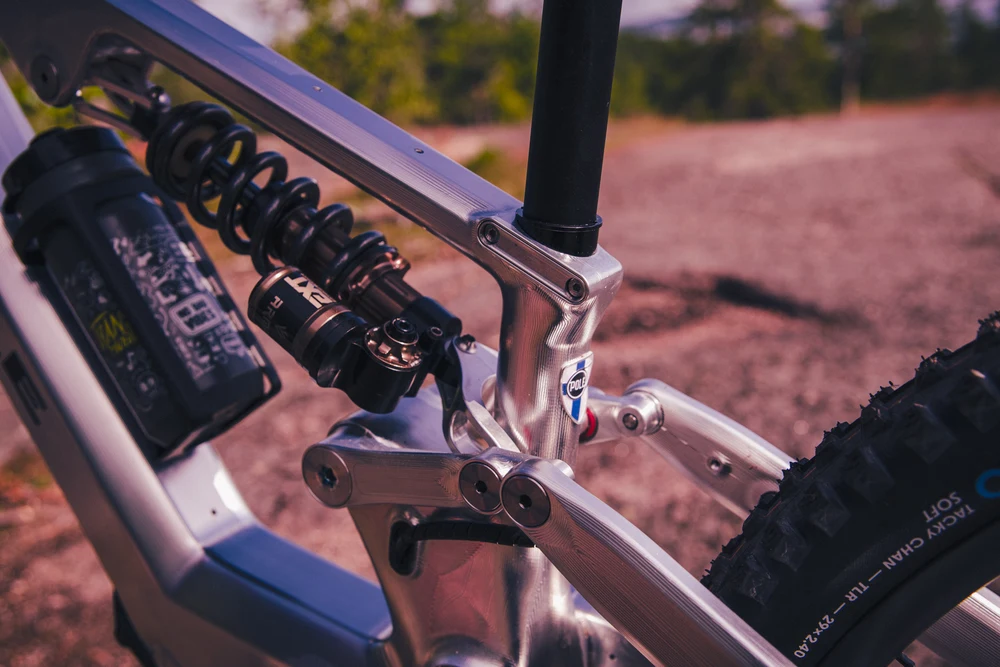
Water bottle or range extender fits inside the front triangle — even in the smallest frame size. No compromises on hydration or e-bike range.

ADAPT OVER TIME

Your Hiisi doesn't lock you into one setup. It evolves with you.

Shock swap
Change rear travel by swapping the damper. Conversion kits available for different travel ranges. Each kit includes matched hardware for correct geometry.
Fork travel
Adjust front travel by changing fork internals — some forks, like the Intend Flash, change travel by simply unscrewing the left leg. This also adjusts head angle and overall geometry.
Mount hardware
Fine-tune geometry through shock mount hardware. Small changes in mounting position create measurable differences in ride character.
Custom geometry
Request specific geometry adjustments. We engineer modifications to your requirements — for an additional fee, your Hiisi can be tuned beyond standard configurations.
THE ENGINEER

One person designs the geometry, the kinematics, and the frame structure. No committee.

Leo Kokkonen

Founder / Lead Engineer

Every geometry table, every kinematic curve, every structural analysis on the Hiisi comes from one desk. Leo designs the frame from pivot placement to wall thickness, runs the FEA, validates the kinematics, and tunes the final product on the trail. The Evolink geometry that changed the industry. The Machine that proved CNC frames. The Onni that won at World Cup level. All the same engineer.

AT A GLANCE
152–200
mm rear travel
160–200
mm front travel
4
configurations
3
wheel setups
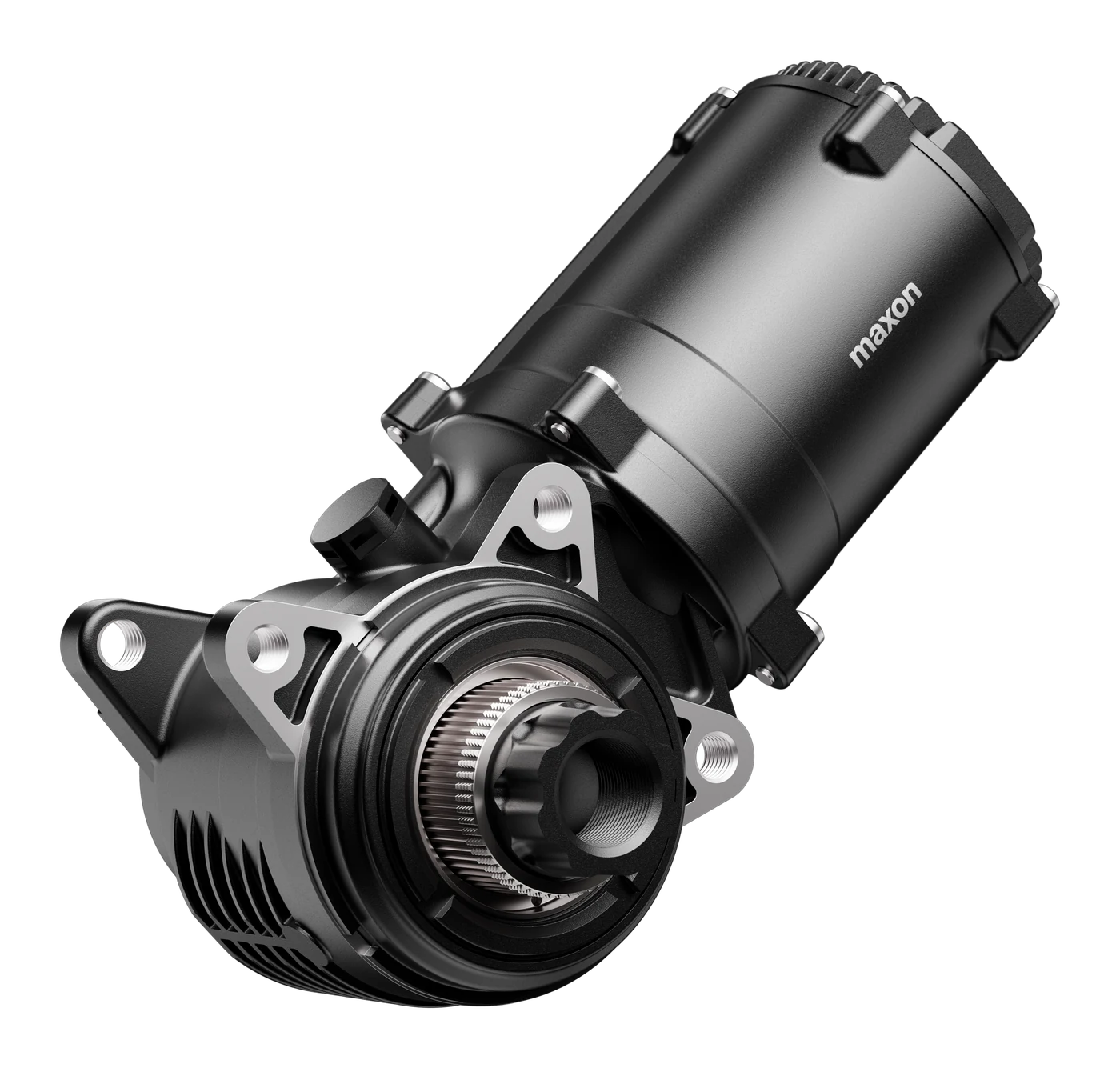
Maxon
Air S motor
600
Wh battery
K1–K3
frame sizes
3
color finishes
7075-T6
aluminum alloy
±0.05
mm tolerance
CNC
machined frame
E-coat
surface finish
27–31%
progression
148
mm rear spacing
ZS44/56
headtube
34.9
mm seatpost